Blackjack Handheld System
Project Overview
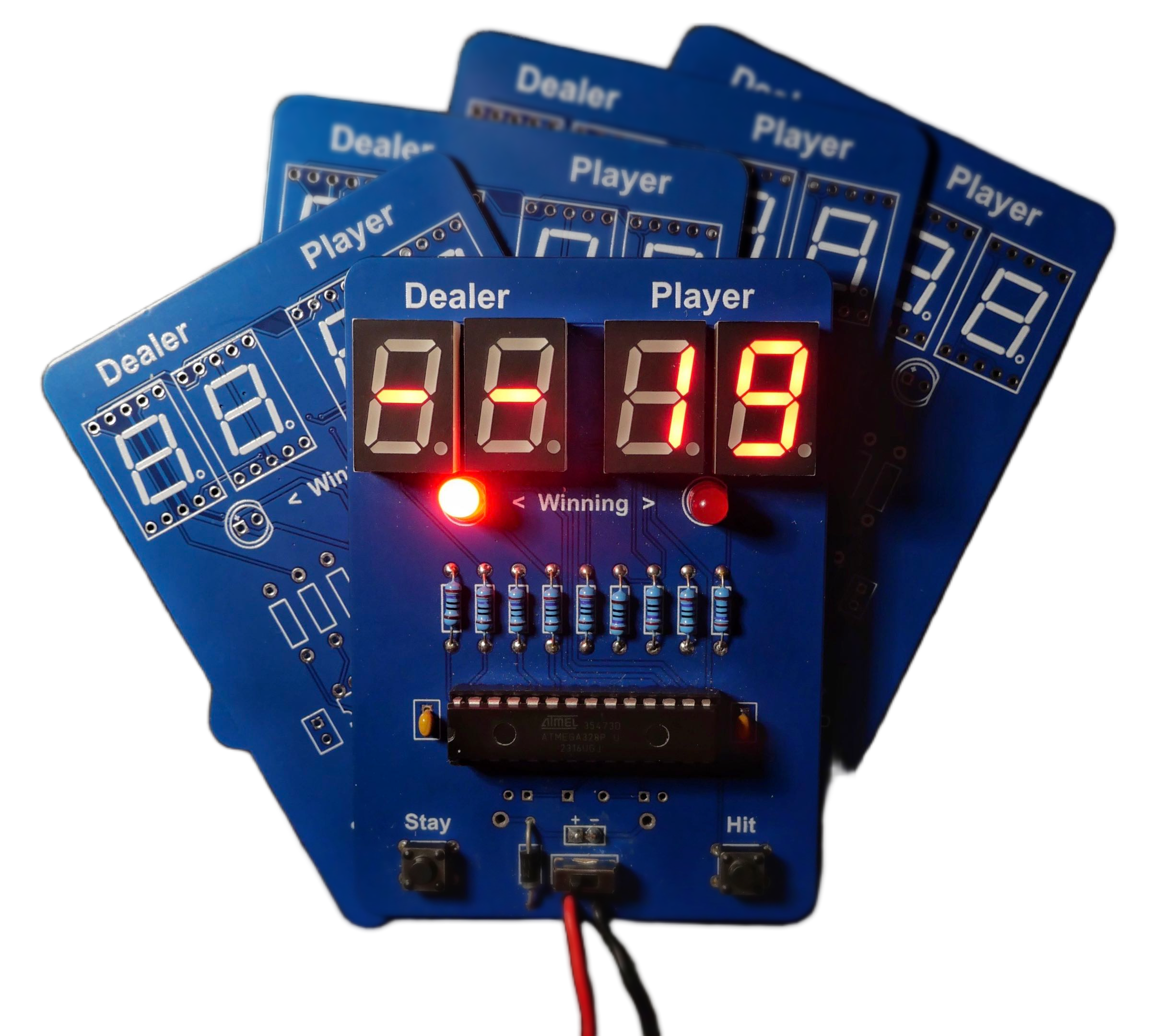
This project is a handheld blackjack game implemented on a custom through-hole PCB using an ATmega328P microcontroller. It is my second PCB design and focuses on embedded system integration, real-time user interaction, and digital display control.
The system features seven-segment multiplexing for score display, dedicated input buttons for gameplay (hit/stay), and status LEDs for player and dealer feedback. The firmware is written in embedded C for the AVR architecture and implements blackjack game logic with rule-based dealer decisions.
The design emphasizes reliable digital I/O handling, efficient display multiplexing, and time-based input filtering for responsive gameplay in a resource-constrained embedded environment.
Assembled PCB
Hardware Design
Firmware
The firmware targets the ATmega328P microcontroller and manages the blackjack round flow, button input, dealer logic, score tracking, LEDs, and multiplexed seven-segment displays using non-blocking timing.
Main Control Loop
void loop() {
  // If the round is over, show the score animation instead of
  // accepting new button presses.
  if (showScore) {
    handleBlink();
    return;
  }

  // Update the seven-segment display often enough that all digits
  // appear lit at the same time.
  if (millis() - lastUpdateTime >= refreshRate) multiplex();

  // If either side busts, pause briefly so the player can see it,
  // then let the bust handler finish the round.
  if (dHandleBust()) return;
  if (pHandleBust()) return;

  // Deal the starting cards once when a new turn begins.
  if (beginTurn) initTurn();

  // After the player stays, the dealer draws automatically.
  if (dAllowHit) handleDealerHit();

  // The hit button reads LOW when pressed. The time check keeps
  // one press from being counted more than once.
  if (digitalRead(hitPin) == LOW &&
      (millis() - pLastHitTime) > debounceDelay) {
    handlePlayerHit();
  }

  // The stay button uses the same debounce check before ending the player turn.
  if (digitalRead(stayPin) == LOW &&
      (millis() - lastStayTime) > debounceDelay) {
    handleStay();
  }
}
Player and Dealer Logic
void handlePlayerHit() {
  // Remember when the button was pressed for debounce timing.
  pLastHitTime = millis();

  if (pAllowHit) {
    // Add a random card value to the player's hand.
    int randNum = random(1, 11);
    pTotal += randNum;

    if (pTotal > 21) {
      // If an ace-style value is used, reduce it before calling it a bust.
      if (randNum == 11) pTotal--;
      else {
        // Otherwise, mark the player as busted and start the delay timer.
        pAllowBust = 1;
        pLastBustTime = millis();
      }
    }

    // Convert the total into the two digits shown on the display.
    pPreDigits(pTotal);
  }
}

void handleDealerHit() {
  // Wait between dealer draws so the automatic turn is visible.
  if (millis() - dLastHitTime < 700) return;

  if (dTotal < 17) {
    // Dealer keeps drawing until reaching at least 17.
    int randNum = random(1, 11);
    dTotal += randNum;

    if (dTotal > 21) {
      // Apply the same ace-style adjustment before marking a dealer bust.
      if (randNum == 11) dTotal--;
      else {
        // Stop dealer hits and let the bust handler end the round.
        dLastBustTime = millis();
        dAllowHit = 0;
        dAllowBust = 1;
      }
    }

    dPreDigits(dTotal);
    dLastHitTime = millis();
  } else {
    // Once the dealer reaches 17, compare scores and end the round.
    dAllowHit = 0;
    results();
  }
}
Display Multiplexing
void multiplex() {
  // Save the refresh time for the next display update.
  lastUpdateTime = millis();

  // Turn all digits off before changing the segment pins.
  for (int i = 0; i < 4; i++) {
    digitalWrite(commonPins[i], LOW);
  }

  // Pick the player or dealer digit for this refresh pass.
  int digit = cDisplay == 0 ? pOnesPlace :
              cDisplay == 1 ? pTensPlace :
              cDisplay == 2 ? dOnesPlace :
                               dTensPlace;

  // Write the segment pattern, then turn on only the selected digit.
  sendDigit(digit);
  digitalWrite(commonPins[cDisplay], HIGH);

  // Move to the next digit for the next fast refresh.
  cDisplay = (cDisplay + 1) % 4;
}